In seed and grain processing, clean is not always what it seems. A batch of maize or nuts can look uniform and perfectly healthy to the naked eye. It can even pass through a high-definition color camera without raising a single flag.
Yet the same batch can still carry Aspergillus, a toxic contaminant that leaves no visible trace but is a huge risk to the quality, purity and health of your grain and seed products.
The most dangerous threats are often the ones you cannot see. That is why visual inspection alone is not enough.
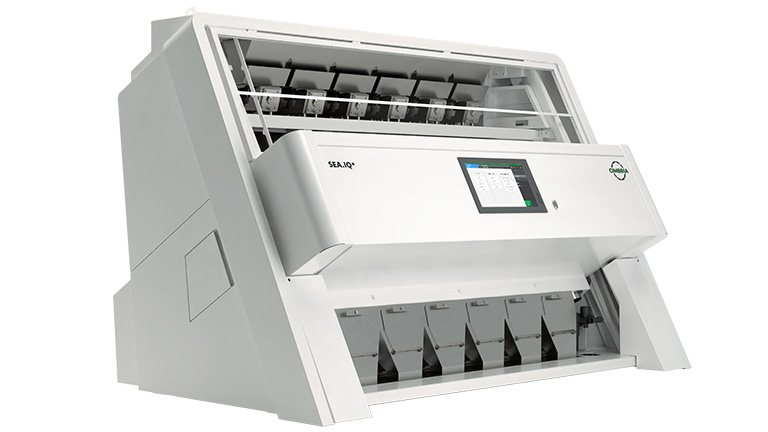
This is where UV technology in optical sorters becomes essential. It adds a layer of inspection designed for one purpose: the detection and removal of Aspergillus before it enters the food chain.
The Hidden Danger of Aspergillus
Aspergillus is more than a spoilage mould. It is the primary producer of Aflatoxins, which are among the most harmful natural toxins regulated worldwide.
Even small amounts can push a batch beyond legal limits, which is why Aspergillus should be treated as a safety issue, not just a surface one.

The difficulty with Aspergillus is it doesn’t always show itself on the surface of grain and seed. Early growth can sit inside a kernel that looks completely normal. The hull can stay bright. The shape can stay the same. And the color can remain unchanged.
To a standard RGB sorter, which reacts only to visible colour differences, the contaminated kernel blends into the rest of the product stream.
This is the blind spot. Aspergillus can be present without leaving a visual signal. UV camera technology closes that gap by detecting the chemical response of the contaminant, not the appearance of the grain.
How UV Cameras See the Invisible: The “Neon Light” Effect
The UV technology in our optical sorters triggers a phenomenon known as Induced Fluorescence.
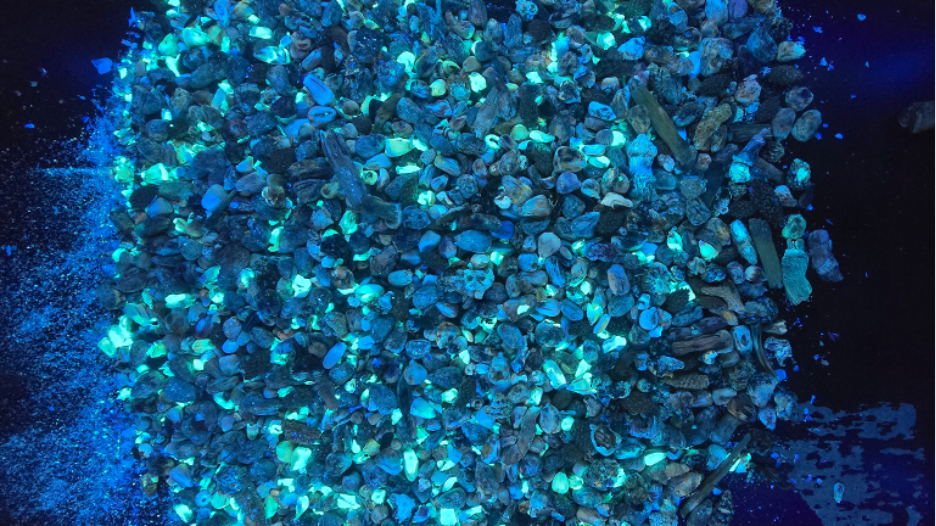
As your grain and seed material passes through the optical sorter’s detection zone, it’s hit with a high-intensity flash of UV light. Kernels contaminated with Aspergillus react to this light in a very specific way. Aspergillus acids absorb the UV energy and release it again as visible light.
To our optical sorter, a contaminated kernel that looked normal a millisecond ago now shines like a bright neon light against a dark background. This “Neon Glow” gives the optical sorter a perfect point of contrast, and it identifies the light signature immediately.
Once the contaminant is detected, the system calculates its exact position, and precise pulse of air shoots it away from your main product stream.
The entire process happens in a heartbeat, ensuring only the purest material reaches the end of the processing line.
Why Color Only Sorting Isn’t Enough
Many processors rely solely on RBG or infrared technology in their optical sorters. These solutions are excellent for identifying and removing obvious defects like unwanted discolored grains or foreign seeds.
But unfortunately, they share one common limitation you should know about.
RGB sorters see what humans see. If the Aspergillus is inside the kernel or has not changed the colour of the hull, it stays invisible. A contaminated kernel can move through the line looking completely normal.
IR sorters detect moisture and density differences. They catch many defects with a different chemical signature. But they can still miss a kernel that looks full and healthy while carrying early-stage Aspergillus. At that stage, the grain has not changed enough for IR to react.
However, adding a UV module gives your Cimbria sorter a chemical-level check that removes contaminated kernels immediately, which is the level of certainty modern food safety demands.
Why There’s a Shift Toward UV-Based Optical Sorting
This shift toward UV-based optical sorting technology is driven by global demand for certainty. In the past, “mostly clean” was often acceptable. But now, the market demands “fundamentally pure.”
This demand is coming from three specific directions:

- Tighter Regulations: Global food safety authorities have lowered the “acceptable” limits for toxins. Many export markets now use “zero tolerance” as a rule. A single contaminated sample can lead to an entire shipment being rejected at the border, costing millions of lost revenues.
- Climate Volatility: Changing weather patterns has increased the risk of fungal contaminants in regions that have never struggled with them before. These “new” toxins often look identical to healthy products, making traditional sorting unreliable.
- Brand Protection: In the age of social media, a food safety recall is a global PR disaster. Certainty is a brand’s insurance policy.
Research shows that UV technology in optical sorters can reduce contamination by over 95%. This is a massive breakthrough for processing businesses because it means batches once considered “lost” can now be saved, cleaned, and sold into premium markets.
Furthermore, UV-based optical sorters significantly reduce waste. Because the UV reaction is so specific to the contaminant, the machine is less likely to make a mistake. Data suggests this can reduce the loss of “good” product by up to 20%.
When you consider that the human eye can only see about 0.0035% of the total light spectrum, it becomes clear why UV optical sorting is the new standard. UV technology essentially “sees” in a way that’s impossible for humans. Because of that, we are finally closing the gap between product that looks safe and product that is safe.
Want to know more about
UV and optical sorting?
FAQ
What is UV camera technology in optical sorting?
UV camera technology in optical sorting is a sophisticated detection system that uses ultraviolet light to identify contaminants under the surface of the material. While a standard RGB camera sees what a human sees (color and shape), a UV camera “sees” the biochemical reaction of the element. This allows it to detect invisible threats that look identical to healthy seeds and grains under normal light, such as fungal Aspergillus.
Why is UV better for toxins than standard light?
Standard light only sees “reflectance” (what bounces off). UV triggers “fluorescence” (the object actually emits its own light). This provides a much higher level of contrast, making it almost impossible for toxins to hide.
Can UV sorters find stones or plastic?
While UV can help with some organic materials, standard RGB or IR cameras are usually better for separating foreign elements such as stones, glass, and plastic. This is why the best machines combine UV, infrared, and RGB technology to cover every possible risk.
Is UV technology in optical sorting safe for food?
Yes. The UV flash is extremely brief (measured in microseconds). It is a non-thermal, physical process that does not change the nutritional value, taste, or quality of the food.
Can a human eye see what the UV camera sees?
No. The human eye can only see about 0.0035% of the total light spectrum. UV cameras allow us to “see” contaminants that are physically impossible for a person to see.
What crops benefit most from UV camera technology in optical sorting?
UV optical sorting technology can be used for corn, nuts (pistachios, peanuts, almonds), dried fruit, seed, grain, animal feed, and other crops where there’s a high risk of contamination.