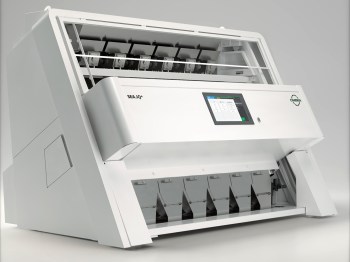
In seed processing and commercial grain handling, one of the biggest challenges is that healthy product often looks exactly like unhealthy product. Good and bad aren’t always visible to the human eye.
Screens will remove undersized or oversized kernels. Aspirators lift away light chaff and dust. Indented cylinders do a remarkable job separating by length. But when defects share the same thickness or density as the good product, those machines hit a wall.
That’s where gravity separators earn their place. They don’t judge a kernel by how it looks. They judge it by what it is. By reading specific gravity, the machine can instantly tell whether a kernel is fully developed or not, even when it looks identical on the surface.
For seed producers and millers looking for high purity products, it’s the machine that finishes the job the others can’t.
In this article, we take a deep dive into the working principles of gravity separation, key technological features, and how this advanced solution delivers greater quality and efficiency for your business.
But first, what exactly is a gravity separator?
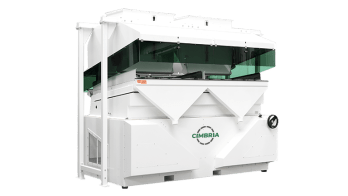
A gravity separator (often called a gravity table) is basically a density grader for dry, free‑flowing granular material. You feed it product that’s already been cleaned to roughly the same size, and it separates the particles by weight. Heavier, fully developed kernels go one way, and the lighter, less developed ones go another.
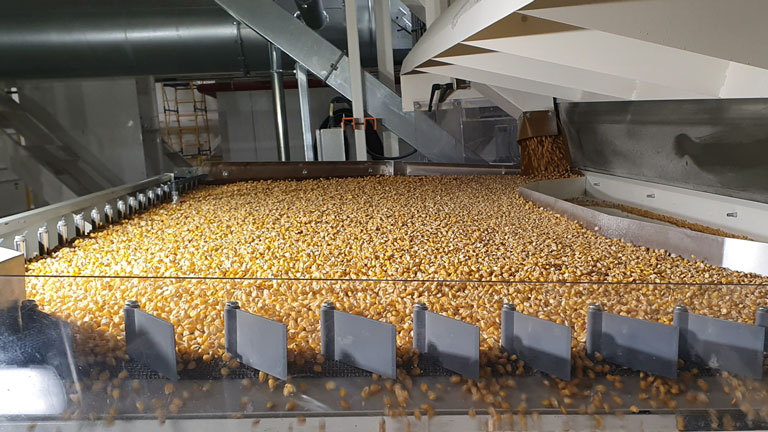
Gravity separators sit just after the pre-cleaners, fine cleaners, and length graders — essentially when all the easier sorting is finished.
They handle everything from tiny seeds around 0.5 mm in size right up to maize and larger legumes around 20 mm. They also handle wheat, barley, rice, coffee, beans, oilseeds, and more. Basically, if it flows and varies in density, a gravity separator can grade it.
What seed and grain businesses use gravity separators for
We already know gravity separators protect your product by removing low‑quality kernels and heavy foreign material from an otherwise clean stream. But what do seed and grain producers actually use them for in day‑to‑day processing?
- Pulls out insect‑damaged, hollow, immature, or low‑germination kernels so the final batch meets certified standards and delivers the germination rates growers expect.
- Remove sprouted or weather‑damaged grain, wild oats and serious contaminants like ergot — the things that compromise flour quality, food safety and downstream performance.
- Catches heavy foreign objects such as stones, glass and metal fragments, often using a built‑in stone trap to keep them from damaging equipment or ending up in the final product.
How do gravity separators work?
At its core, gravity separators use fluidization. By combining upward airflow with a vibrating deck, the grain bed starts behaving less like a solid pile and more like a moving, responsive fluid. Once the product is fluidized, density differences become visible — and sortable.
Here are the specifics of how gravity separators work:
Controlled feeding and intake
Everything starts with a steady, even feed. Raw product enters through a pre‑storage hopper and an electromagnetic vibrating feeder, which spreads the material into a thin, uniform sheet. This prevents surges and keeps the separation stable from the first moment the grain hits the deck.
Vertical density stratification
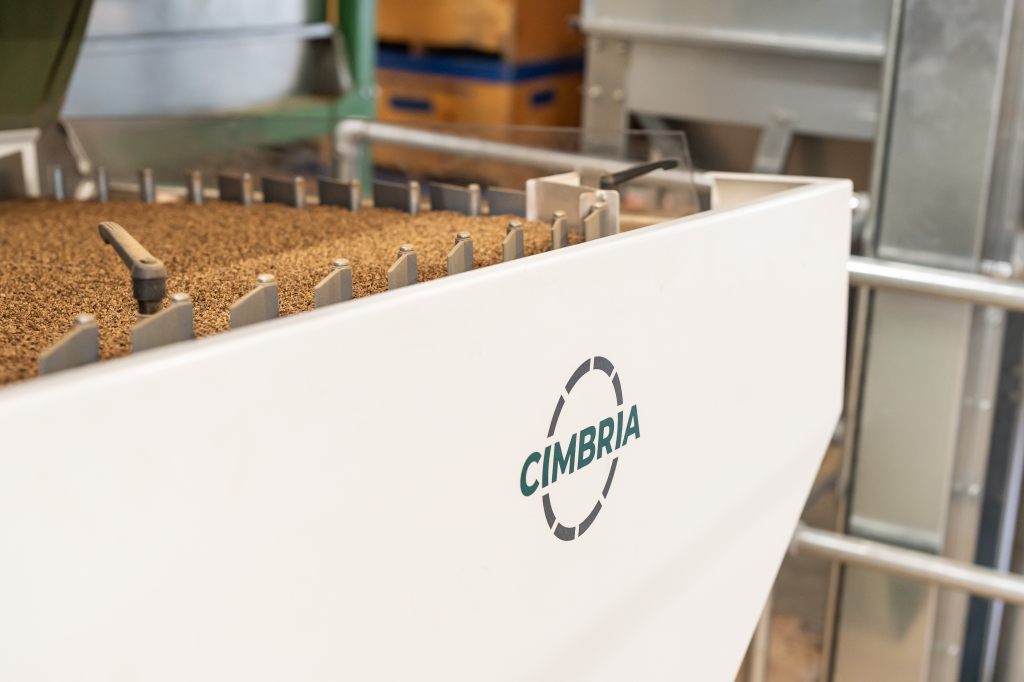
As the product flows onto the porous, inclined deck, pressurized air rises through the mesh while the eccentric drive moves the deck in a rapid, controlled motion. Because heavy and light kernels share the same size and shape, they behave differently only once fluidized:
- Light kernels float on the cushion of air.
- Heavy kernels sink and make contact with the deck cover.
This is the moment the machine “sees” density — the internal quality that appearance can’t reveal.
Dual-vector directional transport
Once the layers form, the machine moves each fraction in a different direction:
- Heavy product (uphill) — Dense kernels grip the deck cover and are pushed uphill by the deck’s oscillation.
- Light product (downhill) — Floating kernels behave like a fluid and slide downhill along the deck’s slope.
The middling layer sits between them, ready for fine tuning.
Segmented discharge
At the discharge edge, adjustable gates split the flow into heavy, middling and light fractions. Operators can tune these gates to match crop type, purity targets and downstream requirements.
Discover why our gravity separators are so innovative
Modern gravity separation is all about control — control of airflow, deck motion, retention time and vibration. Our innovative GA gravity separator series is built around that idea:
Rectangular deck with integrated Maximizer
Traditional triangular decks often narrow toward the high-end discharge edge, causing the heavy bed of material to thin out rapidly. This creates a large, unseparated “middling” zone. Our gravity separators use rectangular deck configurations equipped with a proprietary Maximizer section. Its rectangular geometry maintains a uniform surface from beginning to end, extended product retention time. The design also reduces unseparated “middlings” and expands the clean product zone, ultimately delivering greater yield.
Square wire deck covers and stratification pins
To maximize traction on the deck, we use square wire mesh overcovers. The sharp edges of the square wire give heavier kernels a stronger mechanical grip, helping them climb the deck faster and boosting capacity per square meter. In the intake zone, stationary stratification pins break up seed clusters as they arrive, so your product spreads out evenly and separation starts immediately.
Patented fully counterbalanced eccentric drive
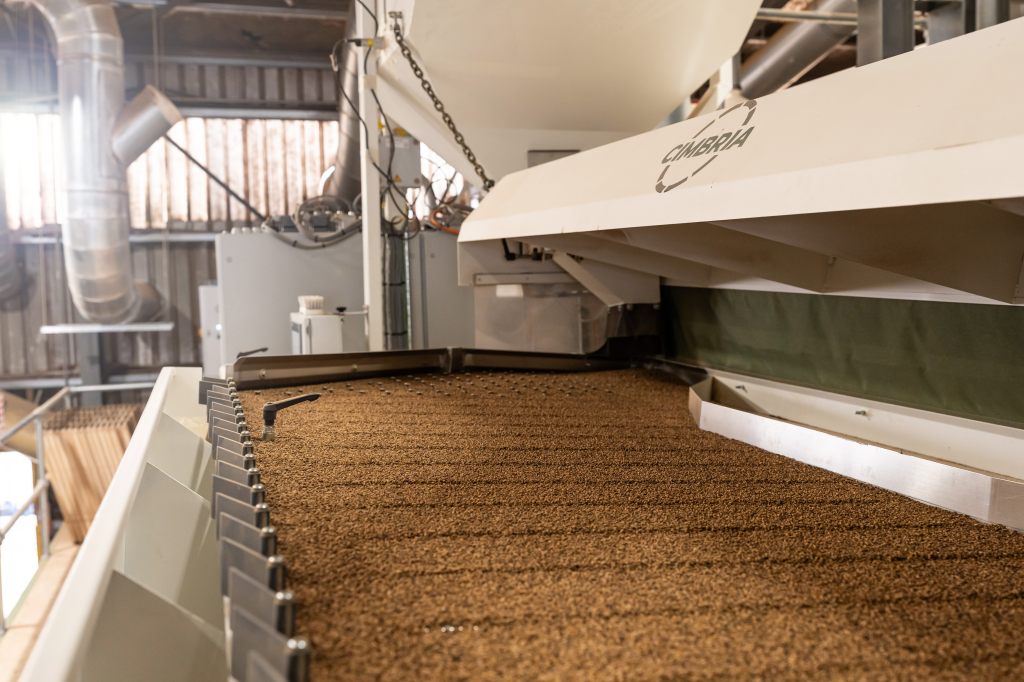
Reciprocating decks naturally create dynamic forces, and on many machines those vibrations travel straight into the building. We solve this with a patented fully counterbalanced eccentric drive. Internal balance weights cancel out both horizontal and vertical forces at the drive shaft, keeping vibration inside the machine instead of sending it outside. The result is a gravity table that runs smoothly without needing heavy reinforced foundations.
Intelligent digital automation
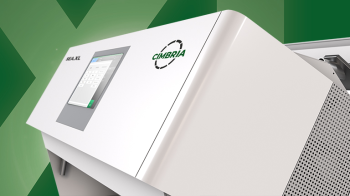
Modern seed plants run on tight schedules, fast changeovers and strict repeatability. That’s why our gravity separators come with an HMI touch panel powered by Siemens PLC control. Operators get clear, intuitive adjustments, and real‑time notifications, making setup quicker, shifts more consistent and day‑to‑day operation far easier.
Energy-saving dust control
Fluidization naturally stirs up dust, and in a busy plant that can add up fast. Our optional Dust Hood captures up to 80 percent of the airborne dust right above the fluidized bed, while using only about 40 percent of the airflow a traditional exhaust system would need. You get a cleaner working environment and lower energy consumption — without pulling unnecessary air from the process.
Get greater grain purity with our gravity separators
When screens and aspirators have done all they can, a gravity separator is usually the next step if you need higher purity or better germination. The Cimbria GA machines combine the classic fluid-bed principle with a few practical upgrades, including rectangular decks, better mesh, counterbalanced drives, and sensible automation that reduce middlings, cut vibration, and make the machines easier to run day to day.
If you’re looking at upgrading a seed or grain line, it’s worth talking through the specific product and capacity with someone who knows the equipment.