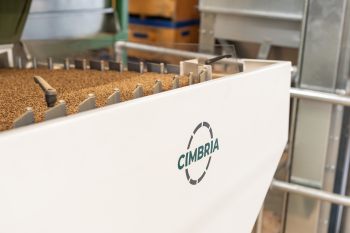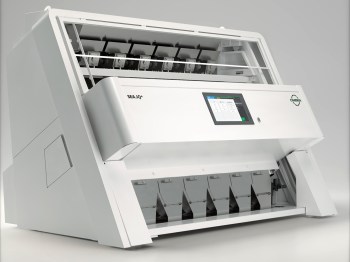
A de-stoner (also known as dry stoner) is one of those food processing solutions that quietly protects your entire food processing line. They remove stones, glass, and heavy foreign material that can damage equipment, reduce product quality, and create serious safety risks for you, your operators, and your overall business.
If your business works with grains, seeds, pulses, nuts, or any food-related product that comes from the ground, a de-stoner is absolutely essential.
What a de-stoner for food processing actually does
A de-stoner separates heavy contaminants like stones, glass, and metals from lighter, good product using air, vibration, and density differences. Even when stones and food material are the same size, the machine can still separate them because stones are heavier.
Here’s how it works specifically:
- Product flows onto a vibrating deck
- Air pushes upward through the deck
- Light material “floats”
- Heavy material sinks
- Each layer moves to a different discharge point
This solution typically sits at the beginning of a processing line, protecting downstream equipment and ensuring your final product meets food safety standards.
Why stones and other heavy foreign material are a problem
Stones, glass, and other heavy foreign materials cause more damage than you realize.
They can break downstream equipment, cause structural issues to conveying equipment, create sparks and fire risks, and reduce product quality. Even a small handful of stones or glass in a large batch can cause thousands of euros in damage.
For example, millers and food processors report 2,000 to 10,000 euros in damage when stones enter roller mills or impact screens. Conveyor belt damage can be upwards of 5,000 euro depending on the size of the processing line.
A de-stoner removes this risk before it reaches critical equipment and your customers.
Where do de-stoners fit in your food processing line?
A de‑stoner only performs at its best when it receives clean, stable, predictable product flow. That’s why its position in the line matters. Placing it in the wrong spot reduces accuracy, increases false rejects, and makes the machine harder to operate.
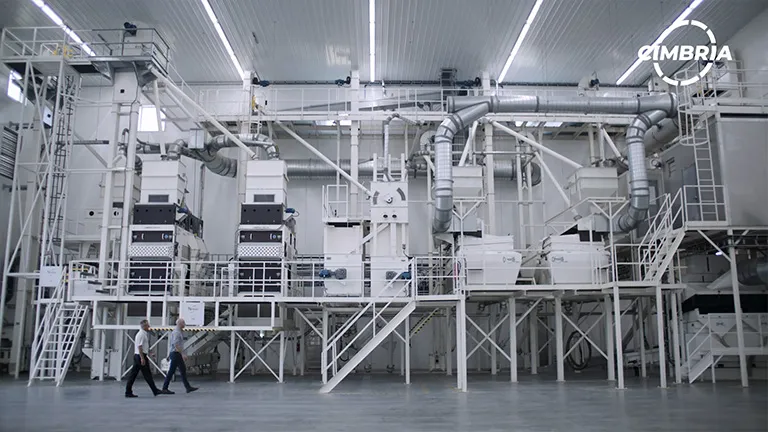
The ideal position is after pre‑cleaning and before fine cleaning or optical sorting — and here’s why that placement works so well.
1. Pre‑cleaning removes dust, husk, and light impurities
Pre‑cleaning machines (air screen cleaners, aspiration systems, scalpers) remove:
- Dust
- Husk
- Chaff
- Light foreign material
- Oversized impurities
This matters because dust and husk disrupt airflow inside a de‑stoner. When the air column becomes unstable, stones don’t sink properly and good product doesn’t float consistently. A clean feed means the de‑stoner can create a stable stratification layer.
2. Stable product flow improves separation accuracy
De‑stoners rely on even, continuous feeding. If product arrives in surges or clumps, the deck cannot form a proper density gradient.
Placing the de‑stoner after pre‑cleaning ensures:
- Product is already loosened and evenly distributed
- Flow is smooth and predictable
- The deck receives a consistent layer thickness
This directly improves separation accuracy and reduces operator adjustments.
3. Predictable airflow equals predictable results
Airflow is the heart of a de‑stoner. Anything that disrupts it, such as dust, moisture, or uneven feeding, reduces performance.
By placing the de‑stoner after pre‑cleaning:
- Airflow remains stable
- Stratification layers form correctly
- Stones sink quickly
- Good product floats and moves cleanly toward the discharge
This is where most of the machine’s precision comes from.
4. Fine cleaning and optical sorting work better after stones are removed
Once stones and heavy foreign material are gone, downstream equipment performs more efficiently:
- Fine cleaners experience less wear
- Screens last longer
- Optical sorters receive cleaner, safer product
- Conveying equipment suffers fewer impacts
- Customer‑grade quality becomes easier to achieve
Removing stones early protects every machine that comes after.
Ready to buy a de-stoner? Here’s what you look for
So, you’re ready to buy the best de-stoner solution for your food processing line? It’s not always easy to know which one to pick.
Here’s what to look for:
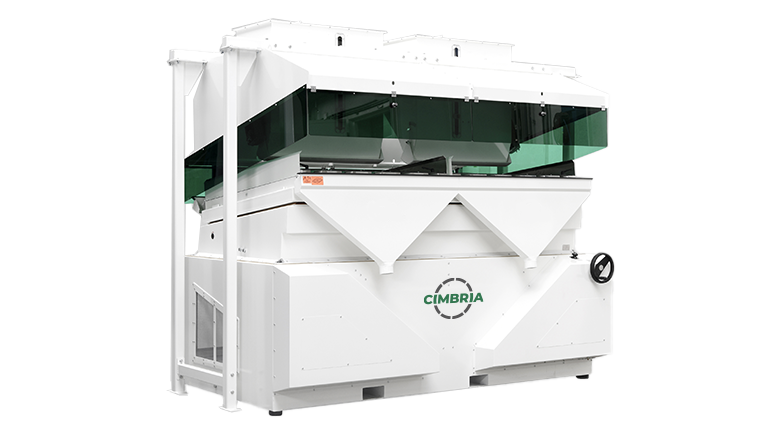
1. Precise airflow
Airflow is the core of any de‑stoner design. De-stoners like our vacuum or pressurized options deploy controlled airflow to create a stable fluidized layer. The airflow makes good product float and stones and other heavy material sink and is engineered for high separation efficiency, even when density differences are small.
2. High-quality vibrating deck
The best de-stoners use a vibrating deck with adjustable inclination, allowing you to fine-tune stratification for different crops. The deck creates a sharp density gradient, which means heavy particles move upwards, while lighter material moves downwards.
3. Efficient dust management
Dust disrupts airflow, blocks deck openings, and reduces separation accuracy. More advanced de‑stoners are designed with dust‑tight construction and can be connected to aspiration systems to keep the air column clean. Clean airflow equals stable stratification and better stone removal.
4. Consistent feeding
A de‑stoner only works well when product flow is stable. We recommend vibratory feeders or controlled inlets to deliver an even layer of material across the deck. Consistent feeding prevents surges, clumping, and uneven stratification, all of which reduces separation accuracy.
5. Easy cleaning and maintenance
De-stoners are built for food‑grade environments. Smooth surfaces, easy access points, and minimal dust traps make cleaning fast and safe. Quick cleaning protects hygiene, keeps airflow performance stable, and reduces downtime.
Vaccum vs Pressurized de-stoners: What’s the difference?
There are two main types of de-stoners: vaccum and pressurized.
Here’s the difference:
Vacuum de-stoner
Vaccum (negative pressure) de-stoners aspirate air upwards through the deck by suction fans or the plant’s own central aspiration system.
The entire machine operates under permanent negative pressure, making it 100 percent dust tight. Only one fan is needed for both process air and dust extraction. And the models are remarkably compact, energy-efficient, and ideal when you want to connect to existing central aspiration. Capacities can go up to around 20 tons per hour.

Pressurized de-stoner
Pressurized (positive pressure) de-stoners blow air upwards through the deck by integrated pressure fans, creating a uniform pressurized fluidized bed. This design delivers very precise de-stoning, high capacity, and a simple feeding system. Capacities reach up to 30 tons per hour. And a separate hood and aspiration connection is normally used.
Both achieve excellent stone, glass, and metal removal. What you choose depends on installation constraints, available aspiration infrastructure, capacity needs, and preferred energy profile.
Is a de-stoner what you need?
Then look no further. De‑stoners are not the most glamorous machines in a processing line, but they are one of the most important. They protect your equipment, improve product quality, and help you meet strict food‑grade standards.
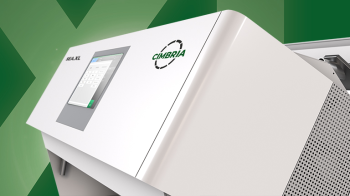
That’s exactly why we’ve developed the Cimbria De‑Stoner range, a complete range of solutions built for high‑precision separation, stable airflow, and reliable performance across grains, pulses, coffee, nuts, and specialty crops.
Our Cimbria de‑stoners combine:
- Vacuum or pressure design for flexible installation
- Adjustable deck inclination to optimize stratification
- Controlled negative pressure airflow for sharp separation
- Dust‑tight construction for clean, stable operation
- Food‑grade access and easy cleaning for safe, hygienic processing
- Capacities from 5 to 30 t/h depending on product and configuration
Whether you’re upgrading an existing line or building a new one, Cimbria’s de‑stoners give you the accuracy, reliability, and long‑term performance your facility needs.