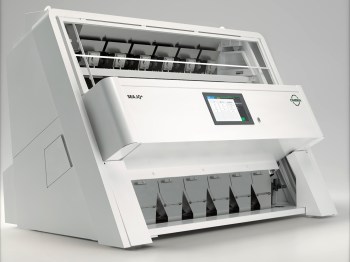
When we ask our grain processing customers what they need more of, the answer is either “higher capacity”, “more tons per hour”, or “better throughput”. That makes sense. Higher capacity and throughput often mean greater profitability.
But here’s the honest truth. Grain processing facilities that consistently achieve higher throughput don’t just install the biggest machines and hope for the best. Instead, they understand where throughout is won and lost across their entire grain handling line.
Because when grain isn’t moving efficiently, adding more capacity rarely solves the problem. It simply moves the bottleneck somewhere else.
With that in mind, let’s look at how to increase throughput in your grain handling and processing line in the smartest ways possible.
How to increase throughput in your grain handling and processing plant
As we already know, increasing throughput in your grain handling and processing plant takes more than simply adding bigger machines and more capacity. It requires an understanding of your grain product and your processing line from beginning to end.
Consider raw grain material testing first
If you want a high-performing grain processing facility, start by identifying quality issues as early as possible, ideally through testing before grain even enters the process. After all, the fastest ton through any processing line is often the one that arrives in the best condition.
Variations in moisture, foreign material, protein levels, kernel size, and test weight create inefficiencies throughout the operation. Dryers work harder, cleaners process more slowly, storage becomes more complex, and operators spend more time managing problems rather than optimizing performance.
By reducing variability at intake and ensuring consistent raw grain quality from the outset, you create the conditions for higher throughput, improved yields, and more predictable operations.
Identify unused capacity (and start using it!)
We’ve seen many grain processing facilities operate below their theoretical capacity. Not because the grain processing equipment isn’t capable, but because they’re not fully optimized.
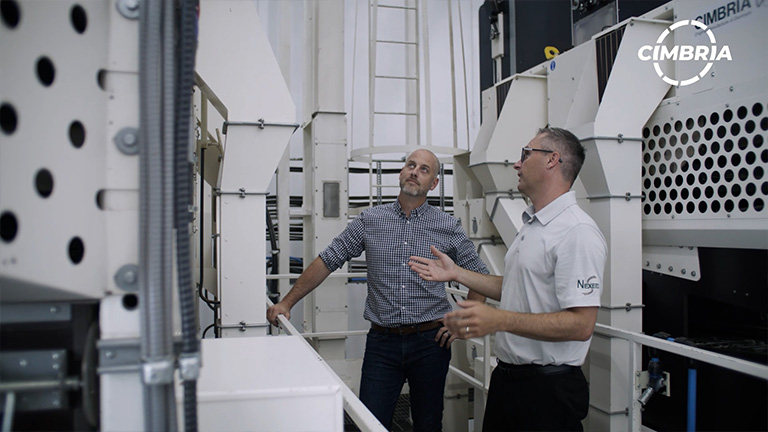
The problem here is the unused capacity just sits there waiting for something (anything!) to happen. And as it sits there, you continue losing profits.
For example, a facility designed to process 1,000 tons per day cannot achieve that output if critical assets are only available 75-80% of the time.
Upgrading your grain processing and handling equipment is therefore one of the fastest ways to increase throughput. Every additional hour of asset availability creates capacity without requiring new infrastructure.
Find the bottlenecks
Every grain processing customer we’ve worked with has at least one bottleneck limiting how much grain moves through their system. Sometimes it’s the intake pit, other times it’s the cleaning or drying phase. Regardless of where it sits, that bottleneck sets the pace of the entire processing line.
The problem is that many operators make the mistake of increasing capacity across multiple areas at once. But in reality, throughput improves fastest when investment is focused on the asset or process creating the bottleneck.
The question should never be, “Where can we add capacity?” The question should be, “Where is the grain waiting?”
Once you’ve identified where grain is consistently queuing, look upstream and downstream from that point. Is the equipment running at its designed capacity? Is downtime causing interruptions? Are operators waiting on information, maintenance, or available storage?
In many cases, the solution is not a major capital investment. Adjusting operating procedures, improving maintenance practices, or simply upgrading equipment components can sometimes unlock significant throughput gains.
Address one bottleneck at a time. Once a constraint is removed, another part of the process will naturally become the new limiting factor. Continuous improvement comes from identifying that next constraint and repeating the process.
Maximize cleaning performance
The cleaning stage has a direct impact on facility throughput. When cleaners are overloaded, poorly maintained, or not achieving their maximum capacity, they can quickly become an unwanted bottleneck. Grain flow slows, capacity is left unused elsewhere in the facility, and the entire operation feels the impact.
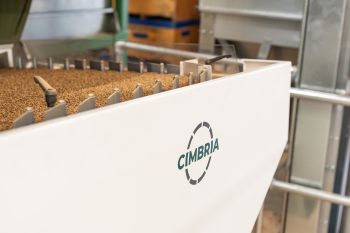
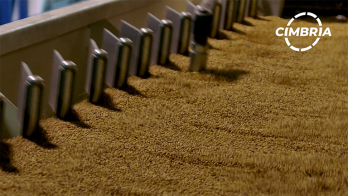
One of the most cost-effective ways to improve cleaning performance is to optimize how grain is fed into your grain cleaning machine. After all, even the most advanced cleaner can only perform as well as the product distribution it receives.
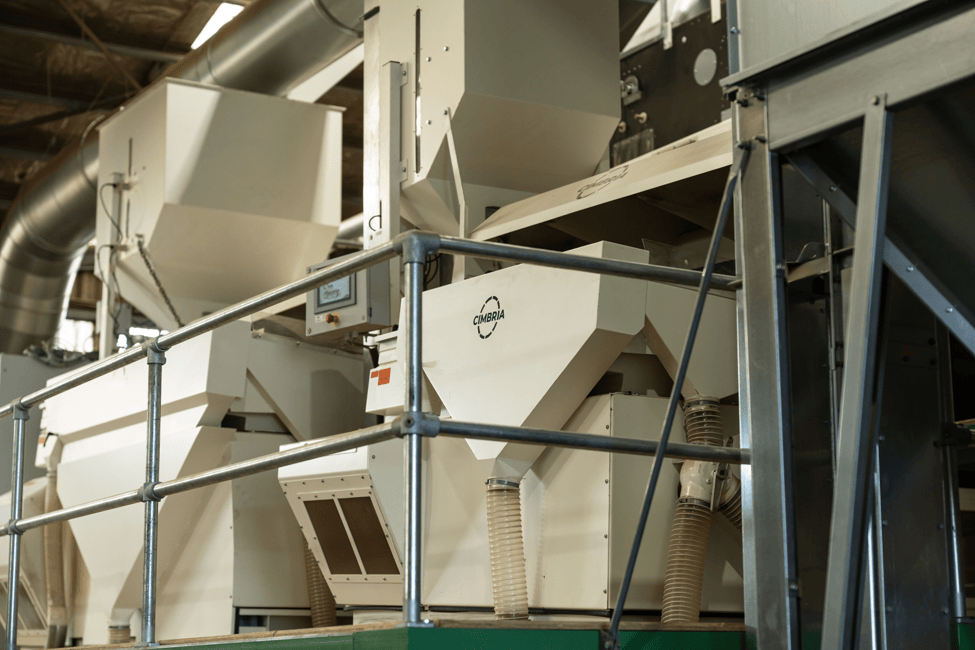
Upgrading feeding components can help create a more uniform product layer across the full width of the machine, allowing screens and air systems to operate more efficiently. Better product distribution improves utilization of the available cleaning area, increases capacity, and helps maintain consistent cleaning ready for downstream equipment.
In many cases, relatively small upgrades to the feeding system can unlock throughput gains without the need for a complete equipment replacement.
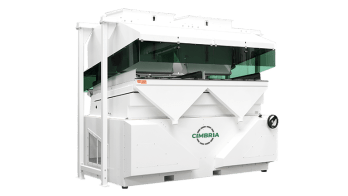
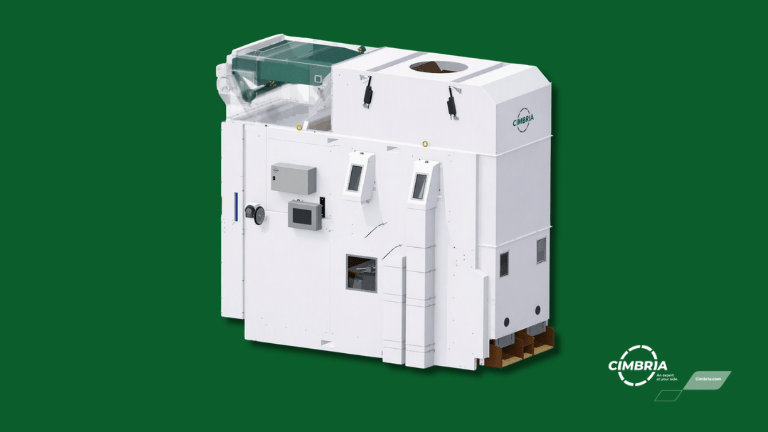
For example, our Delta 146 Cleaner now comes with a high-capacity shaker feeder as a standard component, doubling cleaning performance from 50 to 100 tons per hour. We can also retrofit an existing Delta 146, allowing you to achieve the same performance upgrade without investing in a new one.
Remember: Throughput is a process, not a single machine
When we talk about better throughput, it’s easy to focus on the rated capacity of individual equipment. A grain cleaner can process a certain number of tons per hour. A conveyor can move a certain volume. A dryer has a specified output. But throughput is determined by how well all those systems work together.
Let’s think of it this way. If grain isn’t fed efficiently into the cleaning process, performance suffers. Likewise, if material flow is interrupted upstream, downstream equipment sit idle. Or if one stage struggles to keep pace with the rest of the line, capacity across the entire grain handling operation is affected — and not in a good way.
The reality is that a processing line can only move as fast as its weakest link. That’s why the most effective capacity improvements sometimes come from optimizing the flow of material through the plant rather than simply adding bigger equipment.
Ineffective feeding is a bigger problem than you realize
Inconsistent or ineffective feeding isn’t something grain handlers and processors always think about. But they should. Optimal feeding solutions inside any grain processing machine play a critical role in grain processing throughput and performance.
If grain enters a machine unevenly, parts of it will be underutilized, while other areas can carry a heavier load, resulting in lower throughput and available capacity still left unused.
Getting the feeding right is therefore not just moving grain from A to B, but rather creating consistent and controlled flow that allows the machine to perform as intended. This has become increasingly important as processors look to handle larger volumes without increasing the complexity of their operations.
Want to increase throughput for your grain processing facility?
Then look no further. We have 75 years of experience in helping grain handlers and processors like you increase capacity, achieve greater throughput, and get more out of their operations.
By combining deep industry expertise and proven grain processing technology, we work as An Expert at Your Side to identify the right solutions, whether that’s upgrading existing equipment, removing bottlenecks, or investing in new processing capabilities.
From a single machine retrofit to a complete plant optimization project, we have the experience, insight, and technology to help you achieve your throughput goals with confidence — always.
Take the next step today
Connect with one of our optical sorting experts to find out how you can increase throughput in your grain processing facility.
FAQ
What is the fastest way to increase throughput in a grain processing facility?
The fastest route to higher throughput is often identifying and addressing bottlenecks within the existing process. While many assume increasing capacity requires new equipment, targeted upgrades such as higher-capacity feeders, improved material handling systems, and process optimization can often deliver significant gains with a lower investment and less disruption.
How can I increase grain cleaning capacity without replacing my existing equipment?
In many cases, retrofitting key components can significantly increase throughput without requiring a complete machine replacement. Upgrades that improve product flow into and through the cleaner can help your facility process more grain while maximizing the value of your existing investment.
How do I identify throughput limitations in my grain processing line?
A comprehensive assessment of your entire grain handling process is usually the best place to start. This includes reviewing material flow rates, equipment utilization, downtime, transfer points, and production data to determine where constraints exist. Understanding the weakest link in the process is often the key to unlocking additional capacity.
Is it better to upgrade existing equipment or invest in a new processing line?
The answer depends on your current operation and growth objectives. Many facilities can achieve substantial increases in throughput through targeted upgrades and modernization projects. However, where capacity requirements significantly exceed current capabilities, a larger investment may be the most effective long-term solution. A detailed evaluation can help determine the best path forward.
Who can help optimize my grain processing facility?
Working with an experienced technology partner can help you identify opportunities to increase capacity, remove bottlenecks, and improve operational efficiency. With more than 75 years of experience in grain handling and processing, we help customers evaluate their operations and implement solutions tailored to their specific throughput goals.