When Incremental Upgrades Could Not Keep Up
Richardson Seeds has shaped the sorghum seed industry for decades. As a pioneering hybrid sorghum producer, the company is widely recognized for its commitment to genetic purity, product consistency and continuous innovation, supported by proprietary breeding programs and a long history of technical leadership.
However, as demand increased and production requirements became more complex, the existing facility could no longer keep pace. The plant had absorbed years of incremental upgrades, each intended to relieve pressure. Yet these modifications often introduced new constraints. Bottlenecks emerged at multiple stages of processing, slowing throughput and adding unnecessary variability to operations.
More Than a Short-Term Fix
Richardson Seeds required a fully integrated solution that would optimize current performance while giving the business room to grow, supported by a workflow engineered for reliability, efficiency and long-term scalability.
David Drinnon, General Manager, reflected on the challenge: “Every time we upgraded pieces and parts of our facility, we created new bottlenecks. We went back to the drawing board and every time we came back to the same answer, we needed to start fresh.”
And that’s where Cimbria stepped in through its long-term exclusive partner in the United States, Bratney, which brings Cimbria equipment together with local engineering, fabrication and project delivery expertise.
Identifying the Hidden Bottlenecks
The goal was to create a processing facility capable of supporting higher throughput without compromising the strict quality standards that define Richardson Seeds. A closer evaluation revealed several critical points that affected day-to-day operations.
Material flow was slowed at key transitions, cleaning and grading lacked the consistency required for hybrid seed production, and packaging and storage placed additional strain on the system.
The underlying issue was not necessarily the absence of modern equipment, but the need for a coordinated design, where each stage of the process was analyzed to reinforce the next, and to allow this facility to operate as a single, efficient seed plant.

A System-Wide Approach
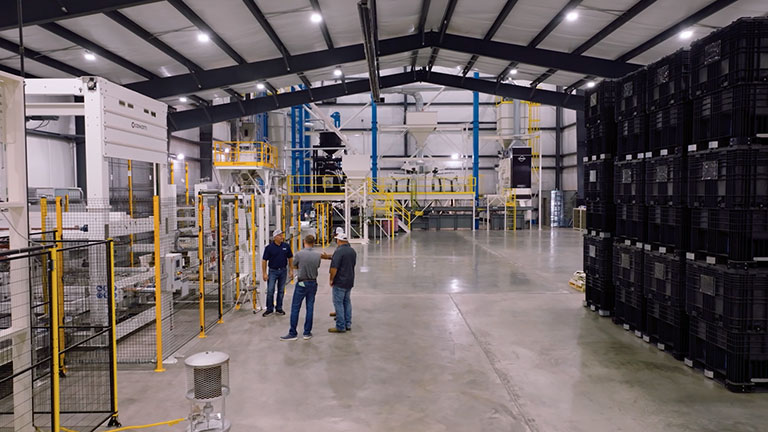
Cimbria and Bratney approached the project from a system-wide perspective. Rather than applying incremental fixes, the teams collaborated closely to reimagine the entire process flow. Our design philosophy emphasized integration, efficiency and scalability, ensuring the plant could adapt to future growth and evolving customer demands.
Roudy Blasingame, Operations Manager at Richardson Seeds, reflected on the choice of partner: “We chose Bratney because they are a family business with a strong history and a track record of successful projects in the seed industry.”
Scott Christensen, Mid-South Region Sales Manager at Bratney, explained the approach: “We built a full sorghum processing line with an emphasis on Cimbria equipment to help Richardson Seeds process their product more efficiently.”
Josh Weitl, Bratney Project Manager, described the planning and execution:
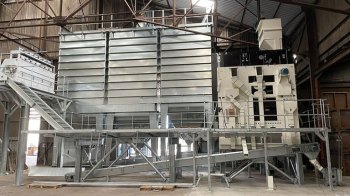
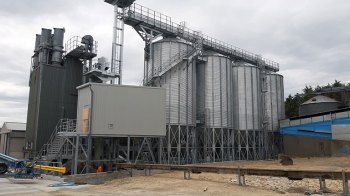
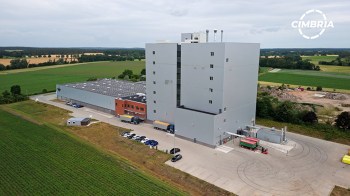
“Richardson Seeds had existing buildings on-site with power lines nearby, and we were able to fit the building layout between those while effectively coordinating truck traffic during the construction process. Once the equipment inside the plant was selected, we used our structural engineers to design and support the installation, then finalized the designs in our fabrication shop to match those ideas before sending them to the field.”
Optimized Equipment for Every Step
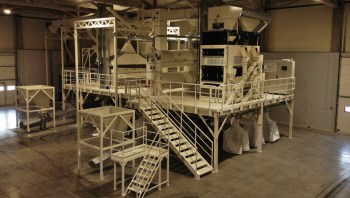
From the first walkthrough, the facility clearly reflects a carefully considered Cimbria design.
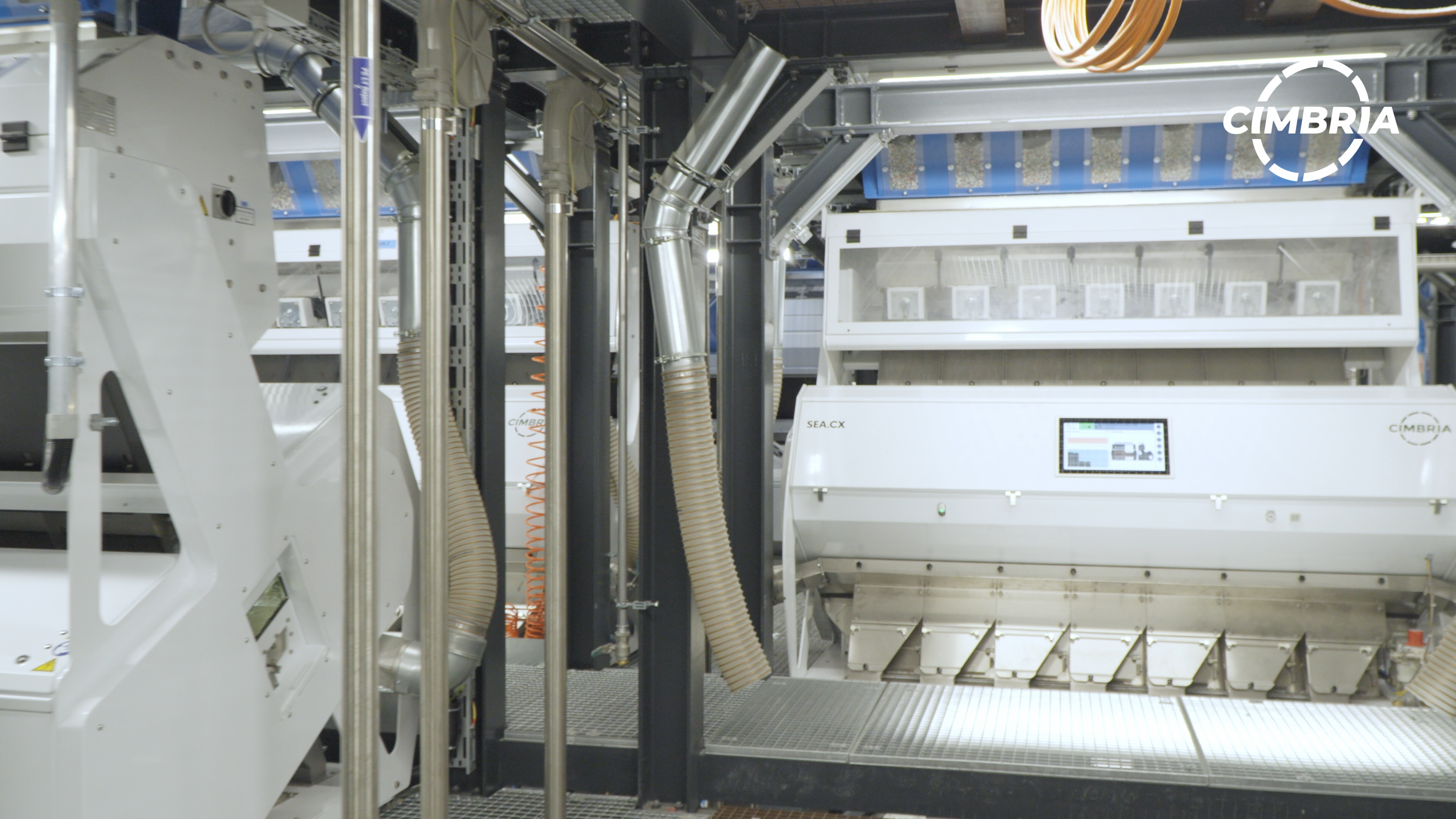
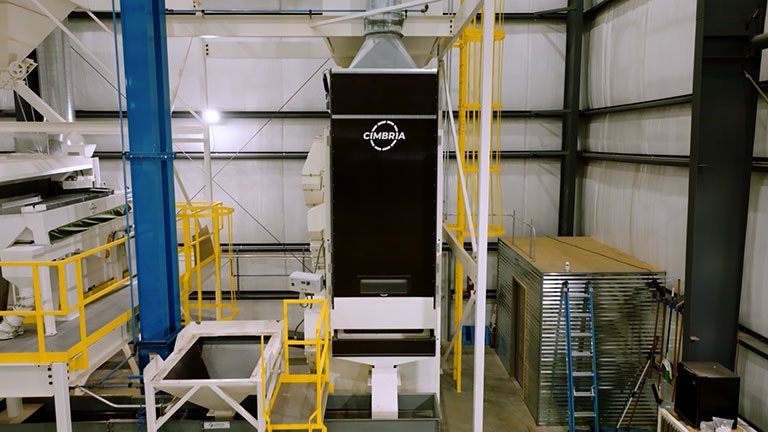
The cleaning line features a full array of Cimbria equipment including a Cimbria Delta air and screen cleaner, Cimbria Heid gravity tables, a Cimbria Heid indented cylinder, a Cimbria SEA TR color sorter and a Cimbria aspirator to demonstrate a complementary approach to seed separation and quality assurance.
These technologies were selected not only for their individual performance, but for how they work together to maintain seed purity and optimize throughput.
- Streamlined Material Handling: Carefully designed systems move seed efficiently throughout the plant, reducing manual handling and eliminating bottlenecks.
- Advanced Cleaning and Grading: The SEA.TR system and gravity tables deliver precise separation, while the Delta Cleaner and indented cylinder ensure uniformity and high-quality cleaning and grading for hybrid seed production.
- Integrated Workflow: Equipment is carefully positioned to support the next stage, creating a smooth, predictable process that maximizes productivity and minimizes downtime.
By designing the plant around these technologies, Richardson Seeds benefited from a fully integrated system that balances capacity, quality and flexibility, ensuring long-term operational performance.
A Collaboration that Drove Results
The project was executed as a true partnership. Bratney’s project engineers, in collaboration with Cimbria’s project engineers, worked side by side with Richardson Seeds’ operations team to ensure the plant design was tailored to meet their needs on their existing site layout while optimizing performance.
Drinnon reflected on the impact:
“Walking through our old plant was fine, but the new facility is a real ‘wow.’ It gives visitors confidence in our operations and shows where we are going as a business. It also gives us the ability to serve customers better and provide more consistent product quality.”
This close collaboration allowed the teams to anticipate operational challenges before they arose and to implement solutions that deliver long-term value rather than short-term gains.
Lessons Learned: Finding Efficiency Through System Thinking
The project highlighted an essential principle in seed processing. Incremental upgrades rarely succeed in the past when the plant was treated as a collection of isolated tasks.
Real efficiency emerges when every part of the operation is designed to work in concert, from material handling to cleaning to grading and packaging.
When these elements are integrated with intent, the entire system becomes more predictable, more productive and far easier to manage. Our team applied this perspective from the beginning to ensure that their clients investment supports measurable gains in performance and long-term operational stability.