Indian seed quality is defined by consistency of processing, reliability of delivery, and the level of control producers maintain over timing and standards.
Founded in 2021, Shambavi Agri Seeds represents a new generation of Indian seed processing companies. They’re research-driven, quality-focused, and guided by a clear long-term vision.
As the company expanded into higher-volume processing across crops such as corn, maize, millets, and vegetables, the team quickly recognised the need for more advanced processing equipment, and smarter, scalable solutions that would allow them to grow efficiently without compromising quality.
Outgrowing the limits of a rented model
When Shambavi Agri Seeds began operations, they used a rented processing facility, which suited their initial volumes and allowed them to move quickly.
As volumes increased, the limitations became clear. Processing schedules depended on third-party availability, flexibility was restricted, and maintaining consistent control over throughput and quality became difficult. The focus then shifted from whether to invest in a dedicated processing facility to how to do it in a way that supported growth, protected quality, and remained commercially viable for a young, fast-growing company.
This led to their partnership with Cimbria.
Starting with intent, not specifications
When Shambavi Agri Seeds approached Cimbria in 2023, they came with a clear vision rather than rigid technical specifications or a predefined layout. Their objective was well-defined: to replicate the proven performance of the rented processing line they trusted, while building their own advanced facility that would ensure long-term independence, scalability, and future growth.
That objective shaped the project from the start. Discussions were practical and operational, focused on real production requirements rather than theoretical maximum capacity. There was a deliberate decision not to oversize the plant or invest ahead of demand.
Instead, the focus remained on core questions: What capacity does the business need today? Which crops require the highest levels of cleaning and separation precision? And how can the investment remain scalable as volumes and product ranges expand?
Designing for discipline, not headline capacity
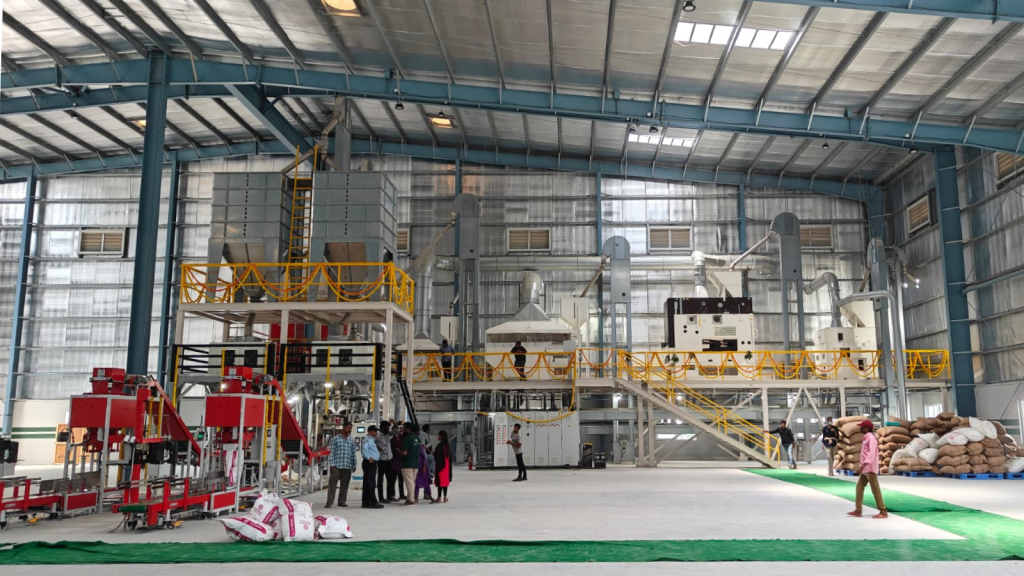
The resulting system reflects that approach. The installed line has a nominal capacity of five tonnes per hour, with the ability to reach nine to ten tonnes per hour depending on crop type and operating conditions.
More importantly, it delivers consistent, repeatable performance across multiple crops. The priority was not headline capacity figures, but reliable throughput without compromising seed quality.
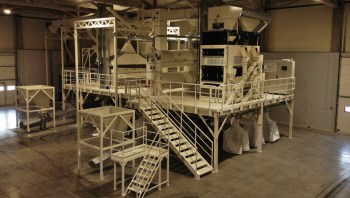
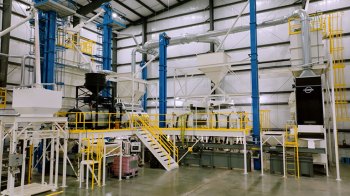
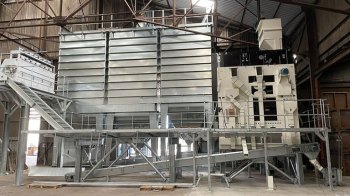
The installed processing solution
The line was designed around a five tons per hour paddy seed input, a deliberate choice that reflects an understanding of how young seed companies actually operate. Rather than chasing peak capacity figures, the focus was on maintaining consistent separation quality across crops and seasons.
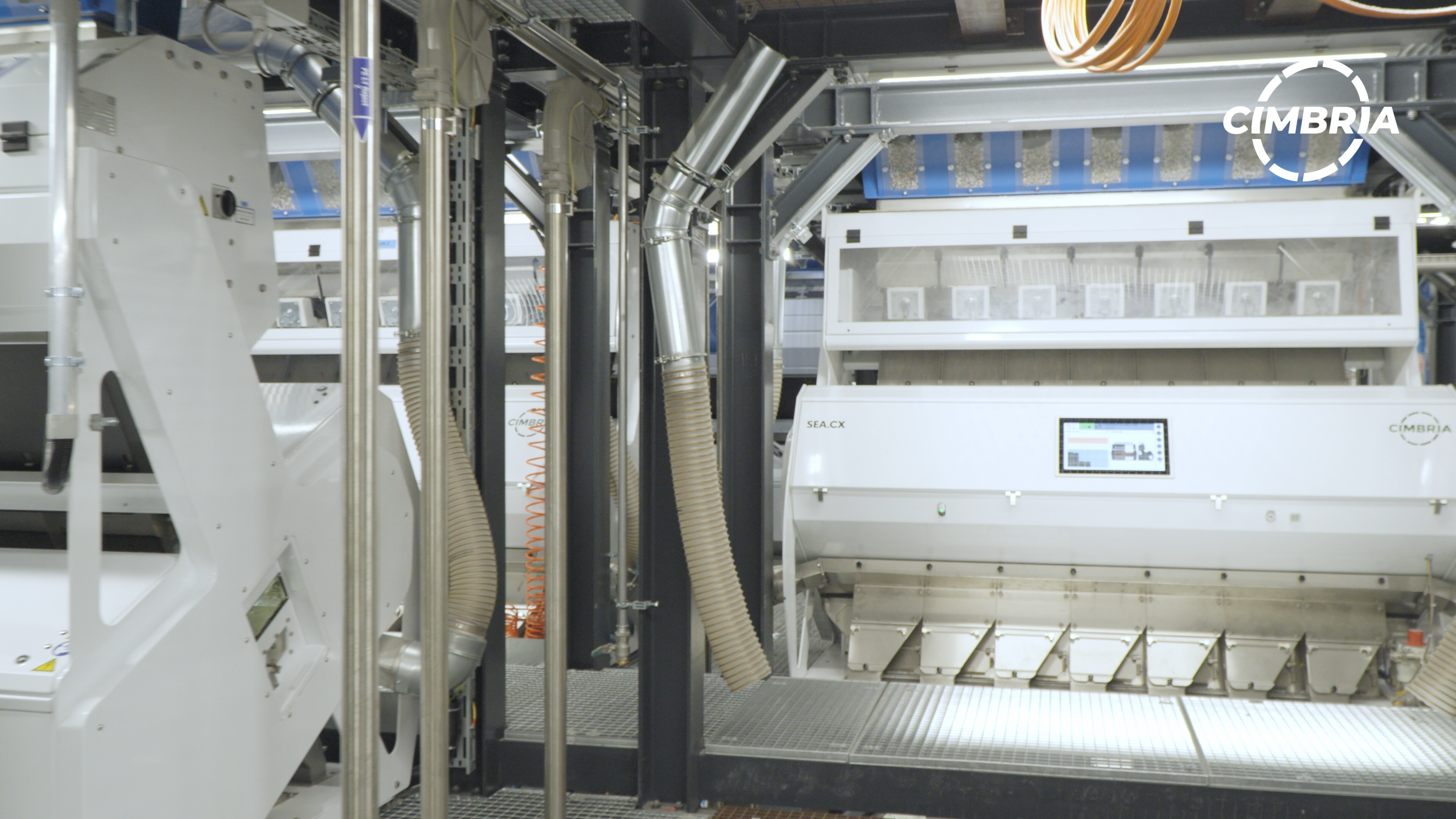
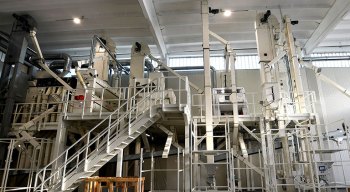
The cleaning and grading sequence combines a Delta 142.2 Precleaner with a Delta 106 Super Fine Cleaner, followed by a two-stage gravity setup using a GA 310 Gravity Separator and a GA 71 Middling Gravity Separator. This configuration is particularly effective for multi-crop operations, as it allows precise density separation while improving recovery through controlled reprocessing of middlings — an area where simpler lines often lose value.
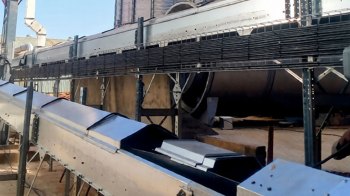
A TS 180 Destoner and a centrally engineered aspiration system with SCF 930 Super Cyclofan ensure that heavy contaminants and dust are removed early and consistently, protecting both seed quality and downstream stability. Low-speed EC8LS bucket elevators and GT 400 belt conveyors were selected intentionally to minimise mechanical stress, reflecting a priority on seed integrity rather than raw throughput.
Crucially, Cimbria delivered complete plant design engineering, ensuring that each machine performs as part of a balanced system. This integrated approach allows the line to scale output when conditions allow, without sacrificing the repeatability and control that ultimately define processing performance.
Execution that stays close to reality
From the very beginning, Cimbria’s role went well beyond supplying equipment. The project required coordinated management across design, installation, and commissioning, within real-world constraints including global supply timelines.
Cimbria worked closely with Shambavi throughout the process. Operational requirements were converted into practical design decisions, the local installation team received hands-on technical support, and commissioning was managed as a structured process based on actual operating conditions rather than idealised scenarios.
Local experience makes the difference
This approach reflects Cimbria’s long experience in India. With more than 100 seed processing lines installed across the country, the company understands that project success depends not only on equipment performance, but also on local execution, flexibility, and effective communication.
The facility was completed and commissioned on 7 June 2024 at Seed Park, a major seed processing hub in the region. The location is significant not only because of customer concentration, but because technical expertise, service capability and operational know-how are also established there.
Cimbria’s position in Seed Park is the result of sustained regional engagement rather than short-term project activity. It reflects long-term customer relationships, local crop and process knowledge, and the ability to provide responsive support when required.
For Shambavi, this reduced implementation risk and enabled a faster transition to stable, reliable operations after commissioning.
What this project says about the seed industry
This project reflects several realities that are becoming hard to ignore in the seed sector. Early-stage companies don’t need to invest aggressively, but they do need to invest selectively.
Replicating systems that are already proven in real operating conditions is often a far more effective way to manage risk while still creating room for growth than starting from scratch or overbuilding too early.
It also underlines how processing infrastructure has moved well beyond a back-end role. The way seed is processed directly affects delivery reliability, consistency, and ultimately how a brand is perceived in the market. In many cases, processing performance has become as important as the genetics themselves.
The project reinforces the value of strong, accountable partnerships. Seed processing projects work best when suppliers take responsibility for outcomes rather than simply delivering equipment. That means staying involved through design decisions, installation challenges, and commissioning realities.
For Cimbria, the collaboration with Shambavi Agri Seeds reinforces a long-held belief that the most effective processing solutions are not built from standard templates, but through close dialogue, deep local understanding, and disciplined, experience-driven design. Together, this partnership reflects a shared commitment to quality, performance, and long-term growth.